Category: Uncategorized

Why it’s important to call out internalised misogyny as much as we like to call out misogyny!

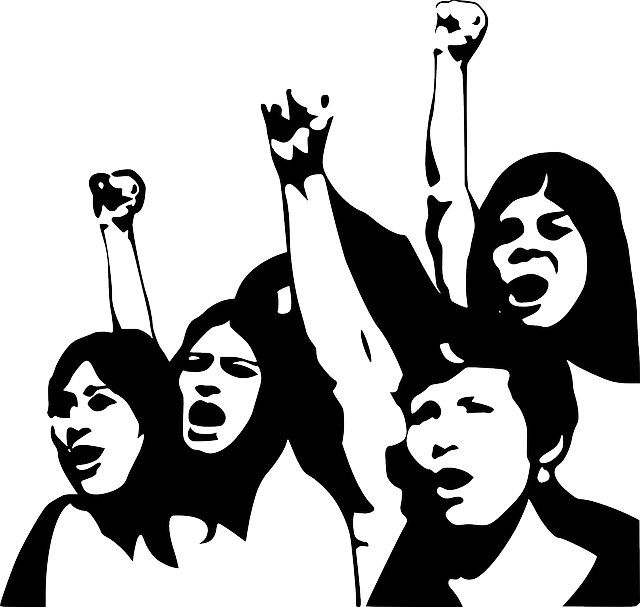
Image by OpenClipart-Vectors from Pixabay

“Customary laws differ considerably among the different regions and ethnicities of Pakistan. …..Everywhere, however, the basic unit is the same, just as it is in Pakistani rural and to a lesser extent urban societies: the ‘patriarchal’ extended family: ‘patriarchal’, though as innumerable Pakistani and Indian daughters-in-law are bitterly aware, behind the patriarchal façade, the grey eminence, the greatest tyrant and the most ruthless enforcer of custom in these families is quite often the senior female.”

Lieven, Anatol. Pakistan: A Hard Country.

I do not agree with Lieven, as there is no patriarchal ‘façade’ here. It exists, and is real, but he makes a valid point about the enforcers of custom being the senior females in any household. Women who have been prosecuted under tyrannical patriarchy and have lived with misogyny their whole lives, learn to imbibe and internalise it to the extent that they themselves become tyrants in their household, long after the patriarch is gone. They maintain the order of patriarchy as they know no other world where women can exist. Should a woman projecting the same narrative be pitied, shielded and not be censured at all? What is the alternative of not calling out such women?

We know of many mothers who shame their sons for not being ‘honourable’ when their daughters engage in free will. We know of many mother in laws, who make their daughter in law’s life hell simply for their existence in their sons life, as they have gone through a similar pattern of abuse. Such older women, having never challenged the status quo, never fought for their own rights and the rights of their daughters and daughters in law, have achieved an exalted status within patriarchy that they are proud of. They reap the rewards of upholding cherished misogynistic customs. They do not deserve brownie points, validation, praise or pity for maintaining the status quo. In fact, it would be dangerous to not speak out against that narrative, which coming out from a woman’s mouth is just as toxic as coming out from a man’s mouth, because if that narrative is not challenged or questioned, it would become an acceptable stance where many women who live day to day with the same ideals enforced in their psyche, would turn their heads down and continue accepting that as the norm.

Women have fought to create safe online spaces for themselves where they can post, question ideas, seek help (mostly anonymously), and learn from new points of view. The ideas in these platforms could be revolutionary for them and help them understand the injustice of their daily lives. If a narrative that has been enforced on them since childhood is then questioned and debated, it might make an impact on their mind and rouse them to think, stand up and revolt. There is no courage, no glory, in keeping the blinders on and cribbing in hushed voices about the evil patriarchs, but never doing anything about it. But what they can change is themselves and thereby change the narrative for their daughters and hopefully their sons. Alternatively, in every culture, there are unethical opportunists, who use the existing system to their own benefit while being hypocrites at the same time. These opportunists, are not victims of the system, they play the system, for their own selfish agendas while leaving behind a chain of damage and not caring two cents about it.

Moreover, the smug misogynists who watch silently from the side-lines are not going to change, because it doesn’t suit them to do so. You can critique and call them out till the cows come home, but would they even lend an ear to beings they consider far inferior to themselves and their intellectual superiority? Mostly they won’t even bother getting into a debate, they will give you a few vile abuses and move on to their comfort zones.

Abuse, and the propagation of it, by either a man or a woman is just as reprehensible and worth being condemned. If we are quick to call out misogyny, we should condemn internalised misogyny as well which is really a shield to it. We need to smash the shield to get at what’s behind it. A man could be a smart puppeteer by not speaking up himself, and letting a woman do his dirty job, but how can we pin him down for not doing or saying anything? How can we exempt an adult of their abusive opinions and actions? Provocation and expectation by someone else, and hundred other social factors could tempt us to commit a crime, but at the end of the day, the person who commits a crime must be held accountable for it.

If women face injustice, women must unite, stand up against it and change their mindsets. There is power in numbers. Unified voices make a difference. Patriarchy isn’t going to give women their rights on a silver platter at a few disjointed voices calling them out, unless women stand tall together, support one another as a coherent group and fight for them. If women are never questioned or censured for their dogmatic, regressive views, thereby imposing on them the urgent need to re-evaluate, think and change, and instead are ignored and pitied for the abuse they propagate, things will go back to square one and the cycle of abuse will continue unhindered. A culture of change needs to be set in motion now. That will only happen, if those deeply affected by it -women, change themselves and fight. Even if we aren’t as ‘privileged’, ‘empowered’ or ‘enlightened’ as we perceive ourselves to be, we can still bring about change. A single voice matters. A single act of defiance matters.
Why it’s imperative for privileged women to speak up, and why privileged men need to listen.

For most of my life I was mute. I didn’t think much about things that didn’t concern me directly. It was a selfish and happy state of being. News depicting the worsening state of the world didn’t interest me because it was grim. I didn’t have much of a voice or an opinion. I did what I was told to do. I faced moderate discrimination and harassment as a girl child and a young Pakistani woman, but I was expected to internalise it and not speak about it. The expectation wasn’t vocal, but it was very loud. Something that isn’t voiced or acknowledged becomes a greater problem because it’s repressed or suppressed and comes out in the form anxiety, depression or even suicidal tendencies. Luckily for me, if I came across a few bad men, I was surrounded by a lot of good men as well who shielded, respected and loved me.

So, why as a privileged Pakistani woman, am I raising my voice, making posts condemning violence against women? What’s my problem? But you see, even though I didn’t face the severest form of abuse, I saw it happen around me, very close to home. I knew of and in some occasions was witness to domestic abuse, sexual abuse and assault happen to my family and friends. But the concept of doing something about it, speaking out, seeking justice was an unheard of thing. So I lent a shoulder, cried with them and moved on with my life.  On very rare occasions, I took a stand and stood up to a bully, but when I did, it made a massive difference to tip the scales in the favour of the oppressed. Does one voice matter? Does a single act or word of support and kindness make a splash in the big pool of injustice. Yes, it does.

Parvin Shakir expresses it well:

Zulm sehna bhi tou zaalim ki himayat therha,

Khamoshi bhi tou hui pusht panahi ki tarha.

I don’t have much of a ‘following’ so I know what I say isn’t going to reach many people. So why speak at all? Because, if I don’t, I would be going to my grave marching like an ant lifting a morsel over its head. My concerns would be self-centred and petty. Maybe, just maybe, I can change someone’s toxic viewpoint and support some oppressed soul who has almost lost hope. Now, a person who has a massive following, a large audience watching their actions and words has a bigger social responsibility to act in an ethical and moral fashion, because they influence many people. In a recent interview Sadaf Kanwal, a privileged Pakistani model and dancer, who enjoys the absolute benefits of free will and choice, propagated the exact opposite for other women, while not following her own dogmatic views. Can we afford to be hypocritical in a country which has seen a recent spike in femicide, where a man killed a woman for serving him cold food? It’s not only irresponsible but dangerous.

Now, when such issues are voiced it’s an uncomfortable read for men. I get that. You don’t want to be painted ‘villains’ by women of your country. But one thing needs to be understood, that we aren’t talking about the good guys. You can keep the superman cape on and flex your biceps with abandon. No need to get threatened. When women make such posts in support of their gender, they are not addressing the men in their lives who have loved, supported and respected them. I am blessed to have known and met many good, decent men as my family and friends. The rage in these posts are directed at the killers, rapists, beaters, bullies and harassers. Unless you are one of them, you can sit back and relax. The post is not for you. Just as you like to take up the cause of the Kashmiris and Palestinians, and call out the oppression, violence and injustices they’re facing, we women, are concerned with the very real, close to home threat upon our person and want to raise our voices against the oppression happening to our gender because unfortunately we all know of a victim and her story. Standing up against cruelty, in any form and anywhere, is still known as bravery. In fact, starting from your own home is considered the better practice. Islam encourages you to speak up against the oppressor, without being biased about it.

But some Pakistani men fluctuate between a state of denial and aggression to crush this outspokenness they’re somehow threatened by.

Their counter arguments that have come to my notice are below with my responses. Again why am I bothering? Hegel advises us to listen to ideas you dislike as there might be ‘some sliver of sense and reason’ contained within ‘otherwise frightening or foreign phenomena’. Hence such contradictory ideas need to be heard, dissected and thought through. For the same reason, it is also imperative that privileged men listen, think and then choose to imbibe if they agree.

  1. Comparative analysis: You start quoting stats on how in A, B or C countries crimes of sexual and domestic violence are way more than in Pakistan. Sure, that could very well be true, although Pakistan ranks as the sixth most dangerous country for women. I’ve lived in the UK- violence against women, toxic masculinity, patriarchy, discrimination and racism all exist here. But shouldn’t our concern be to keep our own house in order? To fix our country, and let A, B and C country fix their own issues? What would this comparative analysis do for us, make us feel good about ourselves, lull us into thinking things aren’t that bad? Do you also realise in Pakistan how many such crimes go unreported due to the honour code of victims’ families and the culture of shaming and silencing. If those were added, how would the stats look? Would the legal system, which is already hostile, corrupt and tipped in favour of the powerful, be able to cope with it?
  • Whataboutism: Under a post discussing violence against women, you talk about how men also suffer gravely and how their depression and suicide issues outnumber women. This is called whataboutism. Men’s mental health is a grave issue in its own right and absolutely needs addressing. Maybe if we took mental health seriously in Pakistan, and there were free facilities provided by the government to such men, these crimes of aggression could see a massive reduction. Women can only benefit if men around them are mentally sound, so it’s in our favour that men seek help, they open up about the struggles they face, they embrace being vulnerable, not feel as if the burden of the entire house rests on their shoulders and they cannot ever show emotional weakness. The culture of toxic masculinity needs to be crushed from childhood, by parents and in schools which would only ease the pressure on men. However, when someone talks about their problem, you do not come up with a counter problem to gaslight that person. If this issue concerns men, they need to talk about it in a separate post, campaign for it and own up to it, but do not bring it up in a post already discussing another problem.
  • Silencing: You talk about why each sexual crime is made into a hashtag and why such hashtags aren’t created for men’s suffering by the media. You have access to media at the touch of a button and normally mainstream media is controlled by men, so please by all means, create your own hashtags, and women will support you because as I said above women can only benefit if we have mentally sound men around us. When a hashtag is created, media attention is directed to that crime, by asking why media attention is given to a single crime is akin to silencing the victim or her family. They have every right to speak up and ask for justice. It doesn’t matter if it’s an individual or a group of victims. An individual victim doesn’t become any less worthy of being heard than a mass of victims.
  • Shaming: Another popular stance is to evaluate a victim’s life choices and pass judgment of why she was more likely to be the victim of that crime. Unfortunately, we cannot make assumptions of why bad things happen to good or bad people, or if they did X, Y, or Z then it wouldn’t have happened because we can’t be sure. Some bad people go through their whole lives without being touched by crime and some good people get prosecuted due to no fault of their own. This bystander’s view is insensitive and demeaning.
  • Denial: You believe, with a frightening sense of self assurance that women in your lives are safe, happy, treated like queens, and they haven’t suffered at least some form of inequality, injustice, abuse or mistreatment. But do you see how unfair and tunnel visioned this stance is? A man cannot speak for a women’s sense of safety and happiness, you need to ask the women of your family that question and if you get an honest reply you would then get a sense of reality. Keeping your head buried in the sand like an ostrich is the easy way out. The first step to change is acknowledging a problem exists. Opening your eyes, looking around, and doing something about it, will only help you and the women you care about.

I’ll just leave with these lines by Ghalib:

Manzil milegi bhataq kar hi Sahi

Gumrah tou woh hain jo,

Ghar se nikle hi nahi.

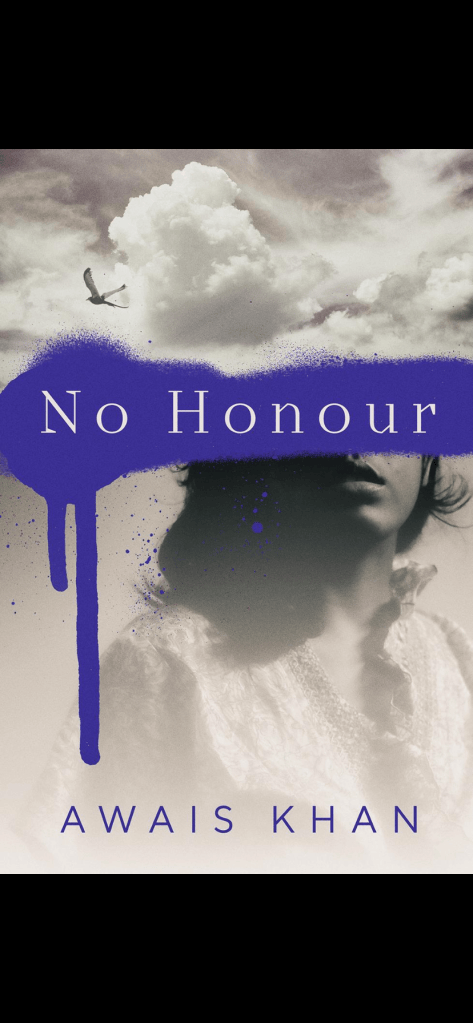
Book Review -No Honour.

Spoiler Alert: Contains major spoilers.

No honour is another unputdownable crime thriller by Awais Khan. This time it’s the heart-wrenching tale of a brave 16-year-old village girl, Abida, who keeps landing herself from the frying pan into the fire by either her own misguided decisions or the evil intentions of people around her. It details her struggle from almost being killed for honour in a Punjabi village, to being sold in prostitution in Lahore, forced into drug addiction and finally her escape to a life of peace. Although the story starts and ends with the honour debate (via honour killings in villages), most of it is about the criminal underbelly of Lahore and its peripheral areas, atrocities of the sex trade in Lahore, drug use by the poor and elite alike and inhumane treatment of Pakistani women in general. Some characters were very well sketched. I particularly liked Jamil’s character for his standing up against brutal customs for his daughter. Kalim’s character is mention-worthy and had a good arc, a classic rise-fall. Abida was pretty much unrelatable for me as the author’s previous character, Mona, and my eyes went quite ‘round’ at her antics, but I liked that she was gutsy. The writing style is quite different from the author’s debut novel ITCOS. ITCOS was unapologetic, a take it or leave it sort of a book, and left a lot to the reader’s interpretation. No honour constantly reasserts beliefs, explains every motive, telling the readers what to think in various parts. I felt my ears burning a little due to the graphic incidents of brutal rape scattered throughout the novel. It was a heavy read in many parts with few light-hearted moments or relief, but such was the nature of the tale and such true stories go unheard every day.

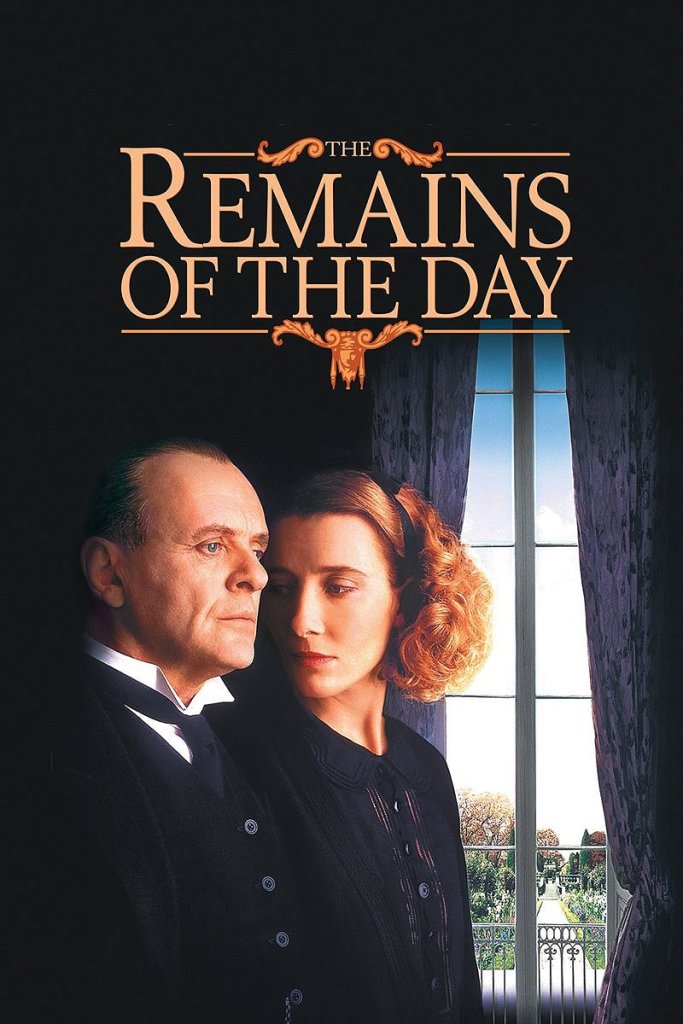
‘Klara and the sun’ & ‘Remains of the day’

Image from google-not my credit

#bookreview

Spoiler Alert: This review contains spoilers.

‘The remains of the day’ & ‘Klara and the Sun’: By Kazou Ishiguro

I have just finished two books ‘Remains of the day’ and ‘Klara and the Sun’ by Kazou Ishiguro back to back and Chandler’s line comes to mind ‘could I be any more awed?!’. Critics have compared his latest masterpiece to his former sci-fi clone romance ‘Never let me go’ but in essence, I feel it’s more like ‘Remains of the day’. Both tackle the themes of unconditional trust and love and a lifetime spent in self-sacrificing service.

Remains of the Day, winner of 1989 Booker prize, and later adapted into a movie starring Anthony Hopkins, follows an ageing old world English butler on a six-day road trip. We discover how he’s struggling to adapt to a changing world and his blind trust in his Nazi sympathising former employer Lord Darlington. Ishiguro expects his readers to work hard, he wants us to imagine, read between the lines and hear the unsaid. We aren’t sitting in the passenger seat here, we are peddling until the finish line. Layers of conscious thought, prattling prose and a concocted notion of dignity need to be sifted for the subconscious. We peel away Mr Stevens’ defensive outer layers to discover what he isn’t saying. He projects, avoids emotions like the plague and misreads situations in his quest for professionalism. Even his narrative voice distances itself from himself by the use of plural rather than singular pronouns. We only get glimpses of reality when he interacts with other characters. The pompous yet vulnerable butler is so blinded by his duty that he sabotages his own happiness and attributes false motives to his master’s obvious iniquitous activities.

‘The evening’s the best part of the day. You’ve done your day’s work. Now you can put up your feet and enjoy it,’ a stranger striking a conversation remarks. Mr Stevens reflects in a moment of clarity, ‘I should cease looking back so much, that I should adopt a more positive outlook and try to make the best of what remains of my day. After all, what can we ever gain in forever looking back and blaming ourselves if our lives have not turned out quite as we might have wished?’ It is perhaps the only time he thinks purely for himself.

Image from google-not my credit.

In ‘Klara and the sun’ we see the world from the pixilated eyes of an AF (Artificial Friend). Klara is intriguing, charismatic and sparkles like the sun her survival depends on. From the very start, Klara busts our deepest concern about AI, that of trust. She demonstrates she is independent, yet empathetic.She is chosen by a teenage girl Josie to be her companion and bought by her mother for more sinister reasons. Josie suffers from a deadly illness as a result of genetic engineering to enhance her intelligence. In futuristic America, loneliness is a real concern for socially distant ‘uplifted’ children who don’t go to a regular school.

At one point in the novel, the mother tries to explain to Klara the concept of the human heart, which symbolises the emotional essence of the person which Klara would be required to emulate. Klara would be tasked to become a robotic version of Josie in the event of her death. However, Klara not only understands the concept of the ‘human heart’ but perhaps is more of a mother to Josie in her selfless love. She knows this plan would never work because her family would not love the fake Josie no matter how hard she tries to be her.

Klara busies herself in her own superstitious and dubious plan of requesting the sun to shower his life-giving nourishment and save Josie. She bargains, makes deals and pleads with it. Midway, through the novel, I’m convinced Klara would fail in her illogical plan. The unexpected turn of events sends a whoop of joy through me, at faith winning against all odds, but soon after I cannot stop my tears. In the end, Klara reflects on the scientist’s words that there was nothing special in Josie that couldn’t be continued in a robotic form. She points out that he was looking in the wrong place. That something special is not inside us, but the people who love us and hence we become irreplaceable.

The novel had many profound gems strewn across its length and breadth. In her naïve-childlike, yet intelligent voice we discover the world anew from an AF’s perspective. Her glitching box-like vision highlights multiple versions we carry within ourselves. Her task is to be a friend, until she ‘slow fades’, and I couldn’t come to terms with that ending until I realised that’s what happens to most of us when we near our end.

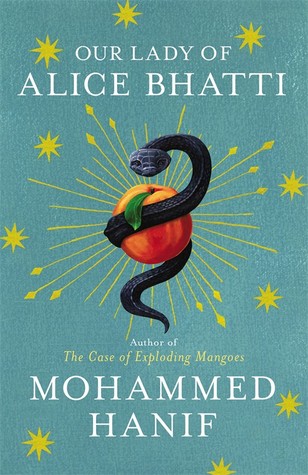
Book Review: Our Lady of Alice Bhatti

Picture from google, not my credit

I was conflicted. I was horrified. I veered between admiring Hanif’s craft and balking at his frank prose. But I was glued. Hanif makes fun of everything in the city I grew up in and every sentence has a sneaking horror laced to it. He captures Karachi like a photographer with a death wish. His prose is irreverent, cynical and so delicious.

The story follows a feisty, too beautiful for her own good Christian nurse Alice Bhatti’s traumatic life as a woman in Pakistan and also a minority which entails double jeopardy for her. I followed her with a sense of impending doom as if she was walking a mine field and the only thing saving her was luck, which she doesn’t attract much off. She falls for an idiotic body builder and as her instinct warns her in the beginning, he turns out to be her nemesis. There are a host of other apt stereotypes lighting up the dark (pun intended) Karachi streets, like the crooked Inspector Malangi with his walrus moustache who likes to dole out murderous tips to his proteges, the tough as nails Head Nurse Hina Alvi who is a closet Christian and Teddy, the body builder who is only eloquent when he talks about cricket and finds his confidence wielding guns.

I loved Hanif’s poetic flourishes. Below are some examples that stayed with me:

“Love is not just blind, it’s deaf and dumb and probably has as advanced case of Alzheimer’s it’s unhinged.”

“First love is like first heart attack. Chances are that you will survive it, but you don’t outlive it. That first gasp of air is beginning of the end.”

“She knows what faith is; it’s the same old fear of death dressed in party clothes”

“Normalcy limping back to the city,’ as if normalcy had gone for a picnic and sprained an ankle”

“Any man who reaches for a book when he thinks about you is a man that you should think about”

“A thick March cloud has cloaked the sun outside. The perfect spring afternoon is suddenly its own wintry ghost”

A tough as nails but at the same time vindicating read.

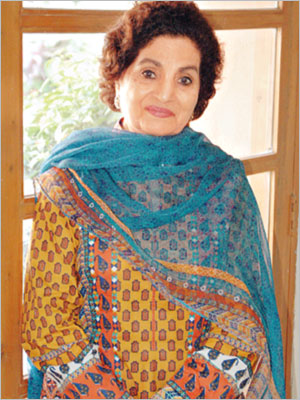
I want a one-way ticket to Haseena Moin’s Pakistan.

Haseena Moin, Pakistan’s legendary and beloved playwright, dramatist and scriptwriter passed away on 26th March 2021. With her an era of hope ended. The hope of a Pakistan I would stumble upon through a secret door to a beautiful world.

I always wanted to be Haseena Moin’s heroine. They were spunky, spirited, humorous and even sarcastic. They erred, failed, rose, loved, lost and owned up to their mistakes. They weren’t perfect and didn’t care to be. They weren’t apologetic, oppressed or downtrodden. They were strong, wilful and empowered. No wonder, I wanted a bit of their gold dust. I wanted the carefree charm of Sana in Ankahi, the spunk and cheekiness of Zoya in Dhoop Kinare, the integrity of Zara in Tanhaiyaan and the bravery of Tara in Shehzori.

I’ve binge watched most of her plays in a day or two, but I can’t imagine anyone having to wait the whole week for that 8pm slot on TV before Khabarnama at 9pm and then suffer through numerous adverts in between.  I could  tolerate it for any other play but not her plays. It would be pure torture.

The world Haseena Moin created around these confident, bubbly young women was a better world. A world where women weren’t subjugated and persecuted by barbaric brutes or perverts. A world where every man, no matter how broody, short tempered or foolish, was a thorough gentleman. Even the supporting male cast wore three piece suits, dressing gowns or sherwanis. Their intense looks could put any mills and boons hero to shame. Their confessions were poetic, deep and measured.  These men were close relatives, lovers, friends and neighbours. They were funny, intense, sweet, sad, but none of them were predators and misogynists.

Growing up, taking a lift from a harried handsome stranger, teasing and joking with a neighbour or turning up at his door in the middle of the night, arguing aggressively to prove a point with a stranger, crying on the shoulder of a random older man in a lift, expressing feelings for a colleague or friend were all a normal occurrence in her plays but were unimaginable and could lead to very harrowing consequences in my real world.

Did Haseena Moin live in this better world, created one for our entertainment or was she trying to give us a layered, between the lines message? I wanted to ask her this question but have lost this opportunity forever. Given Pakistan television’s erstwhile conservative policy to stay away from bold topics, it still didn’t explain the wholesomeness and lovability of almost every character in her plays. Very rarely did she touch upon unpleasantness.  Did she never come across it? Did she always encounter men like Dr Ahmer and Dr Irfan, Uncle Urfi, Mamu and Timmy in Unkahi and Qabacha in Tanhaiyan?

For me, Haseena Moin herself was the heroine of her plays. She was independent, unmarried, probably courted and idolised, successful, graceful, professional, principled and humorous. Did unpleasantness not seep through the world she experienced? I wonder why she stopped writing later on life. Did that world shatter, did she become disillusioned with the changing world around her or was her world no longer appreciated by a television industry that ran after sensational money making gimmickry?

From her response she was passive to writing later. ‘I don’t go anywhere myself for film or television. I’ll write if I’m asked to write.’ Why didn’t television producers ask her to write? Was no new age TV producer a fan of her great work and why didn’t fans like us make more noise to request new plays from her? If we’re quite satisfied watching ‘Mere paas tum ho’, ‘Bala’, ‘Jalan’, ‘Sangat’ etc. we deserve to get the regressive content dumped on us.

Women can aspire to be like a role model but their wings are clipped by their circumstances and societal constraints. They might fight to get from point A to point C on the path to emancipation but that road is fraught with unpleasantness, threats, abuse, assault and even murder. That journey isn’t easy or pleasant. A woman can only be empowered if the very real patriarchy in Pakistan facilitates her and misogyny ceases to exist. A woman can be like Haseena Moin’s heroine if the men in Pakistan are not only like Haseena Moin’s heroes but also her supporting star cast of men. Confidence, optimism and joie de vivre aren’t genetic traits, they’re learned, imbibed and are a product of our experiences.

If the argument is that art imitates reality and we have gruesome, regressive, ‘realistic’ content to watch day and night we start accepting that as the norm. But who will show us a better world? Someone needs to light that torch to show us the way out of darkness. Till we have a Haseena Moin world, women will continue to look over their shoulder for uninvited lewdness, shrink with fear at a raised male voice, be marginalised and harassed at their workplace, adopt and promote toxic gender roles that are ingrained in our psyche through internalised misogyny, and imagine they’re empowered by the crumbs thrown at them by benevolent patriarchs when the meaning of that word was never demonstrated or explained to them. Till then, I urge you to look at her world as a guiding light. This is where we should be as a society

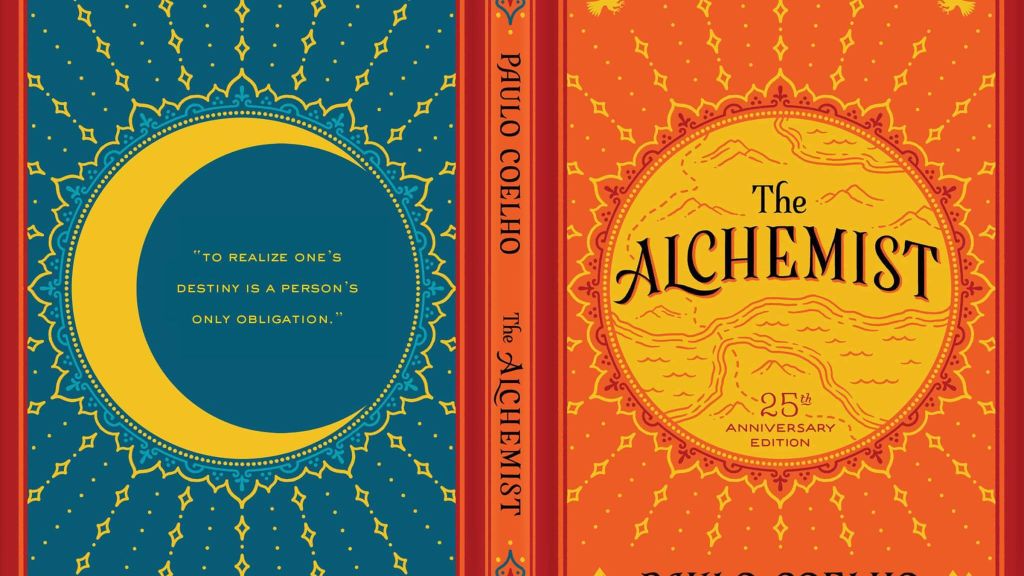
When the universe doesn’t conspire…

Image from google, not my credit.

You know the famous quote from the book ‘The alchemist’, ‘When a person really desires something, all the universe conspires to help that person realize his dream’?

But what if the universe doesn’t conspire?

What if we are left to lead lives of incredible hardships, failure, distress and nothing magical happens to teleport us to our dreams?

Dreaming and wanting are within our absolute power. Every poor, downtrodden, battered soul can dream. No universal conspiring is required for that. Achievement of those dreams is a different matter requiring external inputs, and almost exclusively determined by our privilege. A man may dream to become a famous and successful painter. Being a painter is within his control and dependent on his talent alone, as you just need a canvas and some paints, but being famous and successful is directly proportional to his influence and situation in life. Similarly, one may dream of obtaining true love but achieving love is dependant on the lover’s favour which she/he can withhold and the universe may shrug from the sidelines. Coelho tells us to disregard the lie of fate controlling us, but fate is just a fancy word that encompasses so many societal boundaries and cultural setbacks that come with our birth.

When Santiago is faced with a life-threatening situation he has to turn himself into the wind to escape being killed. The Alchemist simply states, ‘Well, you’ll have to learn; your life depends on it.’ Till this point in the story, Santiago is relatable and human. From then on, he is able to talk the wind, desert and sun and evoke a storm that enables his disappearing act like a trained wizard. And the words of the quote ring true. The universe has bent to his will.

I’ve come up with my own solution to this conundrum, since I’m dubious of my ability to perform magic tricks when the time is nigh and neither does my privilege enable access to echelons of carefully guarded knowledge, success and fame. When doors close, impediments and hurdles riddle your path, people threaten you with murder, it’s time to abort mission. Don’t talk to the wind hoping it’ll understand Spanish or Urdu for that matter and take pity on you.

This definitely puts a damper on the ‘you can do it against all odds’ zealousness, but it also advocates peace of mind. Dreams are important, but while chasing after them ‘against all odds’ we miss the beauty of the present. By staying focused on the ‘accomplishment’ part, we miss the enjoyment of the journey to achieving them. We might not get to our desired point X, but what if we get to point F or even C? Should that be enough? What if Santiago never got any treasure even when he got back home? What if instead he found a musical instrument and playing it gave him lasting happiness?

Redefining dreams is not a bad idea. Flexibility prevents you from breaking. Our soul’s aim should be fluidity not rigidity. Point F and point C may not look as appealing compared to Point X but they could be perfect for you in a way Point X could never be. We choose our dreams and chart our course towards it, but most importantly what that makes us feel about ourselves. What we believe we can do versus what we believe we are.

Social media friends, lovers and haters.

The ongoing pandemic has ensured more of our life is spent online than before. Even the scrooges of social media or sceptic shunners, like my husband, have rallied around. Before the pandemic, he had a linkedIn account as a career necessity. Now, he is on Twitter and Instagram and refuses to follow me (*insert long-suffering sigh here*).

Since most of our life is online these days we have collected a plethora of online friends, lovers and haters like the proverbial stone that gathers a lot of moss if rooted in one spot.

One could argue that online life is also real life, but for the purpose of clarity, I will differentiate between them as two separate planes of existence.

This is all great. Having online buddies to bid adieu to our forced isolation? All great, I say.

But.

The problem with any social media relationship is that it’s a warped world view. A tunnel vision so to speak. The pictures on my social media are those that have me dressed and made up to perfection for parties. They are filtered with light and effects.

My point is, you don’t know all of the person. You know bits and parts of the person online. The person that is shown in select chosen moments to the online world. We can modulate our responses, spell check our chats and research the words typed to us and seem like we are well aware or informed. We can’t do that in real life. We can add filters to our pictures, brighten, heck even change our features and add glowing effects. In real life, we have uneven pigmented skin tone, swollen or sunken under-eye woes, dark circles, pimple marks or scars and creeping lines coming up everywhere we don’t want them to.

We have control to modulate our online presence. This makes me feel like an imposter when someone calls me intelligent or beautiful online. These people have never met me in real life. Their concept of the compliment may not define me at all.

But as human beings being in complete control is like holding water in our fist. We are creatures impacted by our circumstances. We react to our surroundings. Our responses to our online friends can be skewed at times. They can be dictated by numerous real-life events. A spousal fight or work stress can plummet our mood, cause an irritable remark and we’re labelled obnoxious. A preoccupation can translate as inconsideration. A calamity we might be dealing with can lead us to being categorised as oversensitive or emotional. We might not shout out these woes to the online world as the point is to escape them.

However, it is also logical that we reveal more of our real selves online as there is a wall between us and any physical threat or disgrace. We are more inhibited in real life but behind a computer, we feel strangely empowered to bare our soul and mind without much fear of repercussions. We abuse and use curse words with vigour. There is a surreal quality to online interactions. They are strung somewhere between reality and a safe fantastical world where confidences and heart to hearts are shared. As a result, we may end up knowing more about someone than their family and friends would do. The way we comment on posts may reveal aspects of our psyche that even we may be oblivious to. Some astute observers can string together these interactions and form our psychological profile. Online algorithms already do it with flair.

The psychology behind revealing more information online is based on cues related to heuristics. Penn State researchers came up with twelve such cues: control, instant gratification, transparency, machine, publicness, mobility, authority, bandwagon, reciprocity, sense-of-community, community-building and self-preservation. For example, people with a strong ‘bandwagon’ belief system may spew information if others provide it first. Many times, posts where an anonymous OP shares an incident of sexual abuse have people chipping in by admitting it happened to them too. Without this kind of prompt, they will rarely share such personal information about themselves. We are more tempted to complete our online linked in profiles if a number of our colleagues have completed theirs as well.

Now, there is an apparent paradox here. Which one is it? Do we know more or less of a person through social media? Another more relevant question to counteract the first would be, do we need to know everything about a person or just what the person may mean to us? We need to also keep in mind that their meaning may relate to a part of our journey in life, as people themselves are ever-changing.

I have friends who I don’t talk to for months on end and then I talk to them every day for months. Then there are those friends I rarely talk to ever, but they have a special place in my heart, they’ll remember occasions close to my heart without a reminder and they’ll be there to share in all those joys and sorrows. Then there are friends I talk to every day. I feel restless and incomplete if I go without a conversation with them for more than a few days. I’ve had terrible fights and misunderstandings with some friends and that hasn’t affected our relationship equilibrium. The boat of our friendship has sailed right through storms to calmer waters. Some of these relationships are online and some offline.                  

Hence, take character building on social media with a pinch of salt. A little less judgment perhaps. If you’ve known me for less than two minutes on social media hold on to that label. At the same time, don’t love me or hate me based on those two minutes. A relationship at the end of the day, whether online or real life, is only worthwhile if it lasts through thick and thin, through misunderstandings and fights and through good and bad times. Those are the only type of relationships worth taking seriously.

What my ideal day would look like…

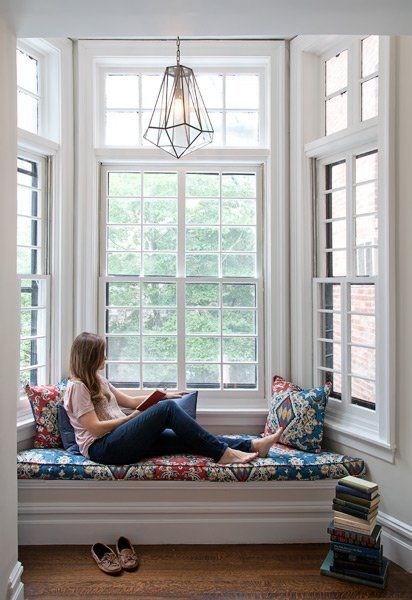
I would be seated in a corner seat by a well-lit bay window. I would have my legs up, my back propped up with the softest down cushions, my hair pulled up my nape in soft tendrils and an airbrushed foundation on my glowing face. The temperature of this seating area would neither be too hot nor too cold, like goldilocks’ stolen porridge, but I would still have a cashmere blanket wrapped around me. Now, this window should have enough light flooding in but it shouldn’t have a breathtaking view as that would distract me from my primary activity. I would be holding a cup of steaming frothy coffee that refills magically and reading a great book.

I wouldn’t be disturbed, even for a millisecond, by my rambunctious toddler. My obliging husband would benignly take complete responsibility of our precious darling. When a sliver of worry would mark my smooth brow, he would flick a curl off his broad manly forehead and tell me I needn’t worry about petty issues like his showing up to office and earning the monthly wage. Eternal questions such as what’s to be cooked would earn a scoff from me, as the many cute animals hiding in crevices in my house would scamper out and take care of it a la Cinderella’s merry band of helpers (rats, birds, squirrels, etc). They would also take care of the cleaning and washing up. Being animals they would obviously be perfectionists. Before you raise a sceptical eyebrow, might I remind you that in the wild we have no vaccinations. Either they make it alive or they’re dead, hence survival of the fittest. Being the fit lot they are, and also magical, they would do a swell job at my domestic chores.

Hot delicious food will float towards me on a gilded ornate trolley in a timely manner. It doesn’t matter who would be pushing it as I wouldn’t take my eyes off my book long enough to notice. It could either be the magical creatures, my husband or my toddler. Since I would be so tired at the end of the day, top-notch salon staff would surround me fussing over my nails, hair and sore muscles. They would massage, mask, primp and scrape away the intense fatigue a day of reading has brought on. They would then run a scented bubbly bath and I would sink into it, to read some more. This time, a passionate romance (no, not erotica). Got to give those grey cells some reprieve. I would float from my bath to my bed on faux fur slippers. Just before switching off the night lamp, in my spacious bed which would be free of both husband and toddler, I’d be about about to check in on my daily social media feed but last-minute good sense would prevail. I would toss my phone aside and drift off into a dream of adventure, strife, fighting evil forces ….yawn.

Image from google: Not my credit.