#aapkiizzat #darenijaat #mittidebaway #pakistanidramas
Spoilers ahead so avoid if you haven’t watched these yet.
Why are recent Pakistani dramas getting more and more regressive by the minute?
Let’s break this down:
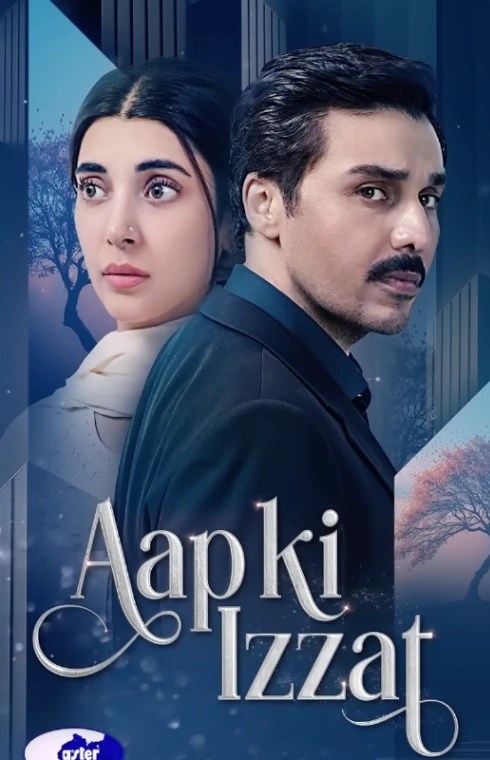
In Aap ki Izzat in reaction to her husband’s cheating, a woman runs away with a vegetable vendor to shame her husband. She does something so ridiculous that no housewife, no matter how uneducated or lacking in basic common-sense or intellect, would consider as a viable option in this situation. We are later shown that the husband is repentant after the woman’s berating, and in turn the woman is repentant, and then they reconcile. Towards the end, a supposedly changed husband is seen telling his friend his wife is a fool and he’s not taking her request of divorce seriously. I was hoping through the series that the Izzat in the title was satirical and used as some fallacy to be corrected but it’s reasserted as a fact multiple times. A woman is a man’s Izzat or honour. That part is not debatable. But yeah she should get respect in her own home. In a country where killings in the name of honour keep increasing because men feel their honour has been compromised this is a very dangerous concept to reinforce with bells and whistles. Anyway. Moving on.
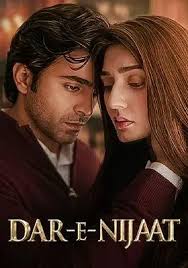
In Dar e Nijat a boyfriend obsessed girl who’s apparently so brilliant that she’s got admitted to Harvard university, is willing to ditch Harvard for the boy who later becomes pseudo religious and dumps her. Now, anyone who’s got into an Ivy League knows that getting in isn’t just about good grades, it’s a mindset, it’s about intense ambition and preparation, you are then not the type to shrug off a life changing opportunity like that saying the boy is more important than the degree. Anyway, she cannot get over the breakup, and is suffering through an emotional breakdown when her weird family, especially a meddling granny, feels this is the time to get her married at her suggestion which she’s obviously made with a distraught, unsound mind. But hey who cares – as long as there is an upcoming shaadi -because what else do we live for? The drama then frames an impossibly shining white knight so morally, and religiously saintly that the only thing missing is a halo on his head, as her salvation. Salvation for what, you may ask? Oh because she had consensual sex with her ex boyfriend, and since that’s an unpardonable sin which renders her irredeemable, she needs this saint Abu Bakar to hold her hand and lift her up from the ground shes fallen on and wrap her in a shawl, symbolic of her lost izzat or honour. Right. Anyone consider therapy as an alternative?
Let’s move on to non Umera Ahmed territory.
Gul Bahar – The writer puts a college girl Dia through hell and high water, (as a grown woman is unable to function independently or live alone) to somehow make her the second wife of a rich but childless man already in a loving relationship with his wife who cannot conceive. I cannot keep watching this one as we all know where this is headed.
Mitti de Baway- This one starts on a promising note, but within a few episodes, takes some alarming turns. A teenage girl is shown starting a relationship with a teenage boy, there is no commitment between them that this isn’t casual, although she’s engaged against her will to someone else. She’s not serious about this lower status, poor boy and eventually dumps him. In true toxic desi style the boy’s ego gets hurt, he breaks into her room, pulls her hair, threatens to defame her in front of her in laws and family and even spits on her face. The girl is immediately made to regret her choices in life of being an arrogant ditcher of innocent boys by another lover turning up at her door and killing her brother on her wedding day. The jilted lover boy, in contrast – attains immense success and is now a respectable, married rich clothes shop owner. He is seen egging his younger brother to abduct a girl he likes because her parents insulted him and his family during the proposal. When his sensible brother refuses, he insults and curses him by calling him be-ghairat – which means lacking in honour- and the internet finds this scene hilarious- not problematic, mind you!
I don’t know about you but I see a trend emerging here.
Forget the predictable misogyny overflowing from giant cracks, forget the repeated references to reinforce the concept of male honour tied to their female relatives, which are the obvious ones, but all these characters are also horrible at handling breakups!
From the dramatic, to the deranged, to the cruel, these characters’ react to breakups in the most immature fashion imaginable. This just means that if you’re unable to handle a breakup, that can be initiated by either party as their prerogative and free will, then you aren’t mature enough to get into a relationship in the first place. Why does a breakup have to mean someone has ‘used’ someone else, like one person is an object/a bag of flour/a bowl of rice whatever – rather than a human being making choices?
Now, this does not mean the script writers of these dramas aren’t good storytellers or are unable to write compelling emotional scenes or create good characters. And fiction does not have to follow any rules – it can showcase the most bizarre, evil, morally questionable characters and situations.
But – if you are privy to a platform that is being viewed and will be influencing millions then there is a social responsibility to create a narrative structure that either does not condemn or condone anything – also known as “holding a mirror to society” which shows things as they are without taking sides, or if it must take a side then it calls a spade a spade. It needs to term an evil an evil, unless the writer’s moral compass is skewed.
If there has to be an endorsement it should be about the ethical, and since the audience is predominantly women, in keeping with the ever present life threatening danger women experience at every turn, not an endorsement of cultural fallacies, suggestions that could endanger them further, or condemnations of religious failings as the ultimate downfall of womenfolk.
Sadly, we the audience are blinded by the pretty faces, acting, the glitz and glamour, the craft, and not the dangerous dogma lurking underneath.
